Error code P0237 is displayed and the check engine light is on - what does this mean?
The OBD/EOBD system has detected a fault in the boost pressure sensor circuit, which is reporting a signal that is too low. This DTC P0237 mainly affects the turbocharger boost pressure sensor and the associated engine management components. For various manufacturers, this fault code may also be referred to as "Turbocharger Boost Sensor A Circuit Low".
What causes can this error code have?
- Defective boost pressure sensor (MAP sensor)
- Damaged or corroded cables to the boost pressure sensor
- Loose or defective plug connections on the sensor
- Short circuit in the sensor wiring
- Defective vacuum hoses to the boost pressure sensor
- Faulty engine control unit (ECU)
- Leaks in the intake system
- Defective turbocharger or intercooler
- Clogged air filter
What symptoms occur in parallel with fault code P0237?
- Loss of power: The engine shows significantly reduced power, especially under load
- Poor acceleration: The vehicle accelerates sluggishly and reacts delayed to accelerator pedal operation
- Uneven idling: The engine runs unevenly at idle or stutters
- Increased fuel consumption: Significantly higher consumption than usual
- Black smoke: Black or blue smoke comes out of the exhaust
- Starting problems: The vehicle is difficult to start or stalls after starting
How can I fix the problem with error code P0237?
- Repairing trouble code P0237 requires a systematic diagnosis of the boost pressure components.
- Replace the boost pressure sensor completely and clean the plug connection, as this is the most common cause of the EOBD error code
- Check all cable connections to the sensor, repair or replace damaged cables and treat contacts with contact spray
- Check vacuum hoses to the boost pressure sensor for cracks or leaks and completely replace defective hoses
- Check the entire intake system for leaks, tighten all hose clamps and seal any leaks
- Replace the air filter and remove dirt from the entire intake system
- Test the function of the turbocharger and intercooler and have them professionally repaired or replaced if defective
- Test the engine control unit with professional diagnostic software and have it reprogrammed or replaced if necessary
FAQ - Frequently asked questions about DTC P0237
Can I continue driving with error code P0237?
Short journeys are possible, but the vehicle should be repaired promptly. Code P0237 can lead to engine damage if the turbocharger receives incorrect pressure values. Avoid high engine speeds and full throttle.
How much does it cost to repair error code P0237?
The costs vary depending on the cause: a new boost pressure sensor costs 50-150 euros, cable repairs 80-200 euros. Costs of 1,000-3,000 euros can be incurred for turbocharger damage. Diagnosis usually costs 80-120 euros.
How do I recognize a defective boost pressure sensor with P0237?
Typical signs are loss of power, unsteady idling and increased fuel consumption. The sensor can be tested for correct voltage values using a multimeter. Professional OBD scanners display live data from the sensor.
Can I change the boost pressure sensor on P0237 myself?
Changing the sensor is possible on most vehicles, but requires technical understanding. The sensor is usually located on the intake manifold or turbocharger. After replacement, the fault code must be deleted and the system readapted.
What consequential damage is caused by ignored code P0237?
Untreated P0237 can lead to turbocharger damage, engine overheating or piston seizure. The engine control unit can switch to emergency mode, which permanently reduces performance. Catalytic converter damage due to incorrect mixture formation is also possible.
How often does error code P0237 occur?
P0237 is one of the more common turbocharger fault codes, especially in vehicles with higher mileage. Turbo engines over 100,000 km show this DTC more often, as sensors and hoses wear due to age. Regular maintenance reduces the probability of occurrence.


 How to change front wheel bearing on MERCEDES-BENZ M W163 TUTORIAL | AUTODOC
 How to change fuel filter BMW 3 (E90) [TUTORIAL AUTODOC]
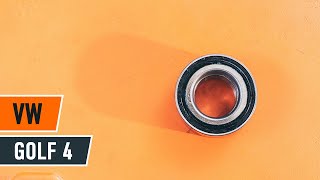 How to change Front wheel bearing on VW GOLF 4 TUTORIAL | AUTODOC
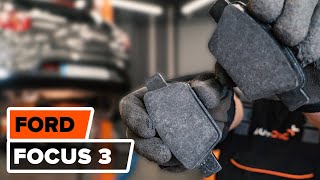 How to change a rear brake pads FORD FOCUS 3 TUTORIAL | AUTODOC
 How to change pollen filter / cabin filter on AUDI A6 (C6) [TUTORIAL AUTODOC]
 How to change engine thermostat on PEUGEOT 207 [TUTORIAL AUTODOC]
 How to change fuel filter NISSAN X-TRAIL T30 TUTORIAL | AUTODOC
 How to change front wheel bearing TOYOTA YARIS XP10 TUTORIAL | AUTODOC
 Free download PDF 1.38 MB
 Free download PDF 1.62 MB
 Free download PDF 4.12 MB
 Free download PDF 7.83 MB
 Free download PDF 3.8 MB
 Free download PDF 7.01 MB

 Ask on the forum

 Extend your engine's life: Avoid these 3 damaging factors | AUTODOC tips
 How to Swap an M50 Engine in a BMW E30 Turbo | AUTODOC Project
 How to choose the right engine oil for your car | AUTODOC
 Top 5 reasons why your car squeals | AUTODOC Tips